
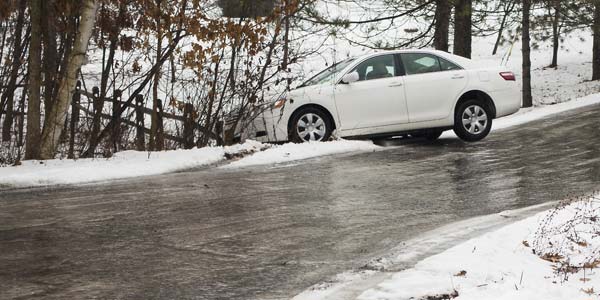


A car that loses traction feels like something happening to the driver rather than something the driver did. The wheel goes light, steering stops answering, and the vehicle travels where physics sends it. Drivers who slide into another car often assume the ice takes the blame. Insurers and courts tend to look at it differently. Weather is generally treated as a condition drivers are expected to account for, not as an excuse that clears them.
That gap between how a slide feels and how a claim is evaluated catches people off guard, and it is a common reason drivers seek a Denver car accident lawyer after a winter collision. Traffic rules generally ask drivers to travel at a speed and following distance that are reasonable for existing conditions. On dry pavement that may be the posted limit. On a glazed surface it may be considerably slower.
A driver traveling at the posted limit can still be found to have driven too fast for the conditions, and that idea surprises people. Skidding is generally treated as foreseeable during winter. Because of that, the presence of ice by itself is seldom enough to shift responsibility away from the driver who slid.
What can matter is whether the driver had a realistic opportunity to avoid the hazard: speed, following distance, tire condition, whether the ice was visible or hidden, and whether the driver was doing anything else that narrowed their margin. Winter pileups seldom have a clean answer. Many states allow fault to be shared among drivers, and a person found partly responsible may have any recovery reduced accordingly.
In a multi-vehicle chain reaction, sorting out who struck whom, and in what sequence, can take accident reconstruction rather than a roadside conversation. How sharing works, and what it does to a claim, depends