


“Federal university lecturers rarely repeat exam questions verbatim; what they repeat are core topics.” When Dare Adeola and Olamide Onigbanjo set out to build UniBeta at the University of Lagos, they made the quintessential early-stage mistake: trying to build an “everything app.” They crammed timetable scheduling, street vox pops, peer tutoring, and a campus marketplace hawking thrift streetwear and perfumes into a single platform. The result?
The outsourced mobile app arrived riddled with bugs, repeatedly failed Apple App Store and Google Play reviews, and nearly wiped out their savings. Worse still, they ran headfirst into the brutal reality of Nigerian edtech: massive traffic spikes two weeks before exams, followed by total ghost-town churn the second papers are submitted. Instead of shutting down, they stripped away the bloat.
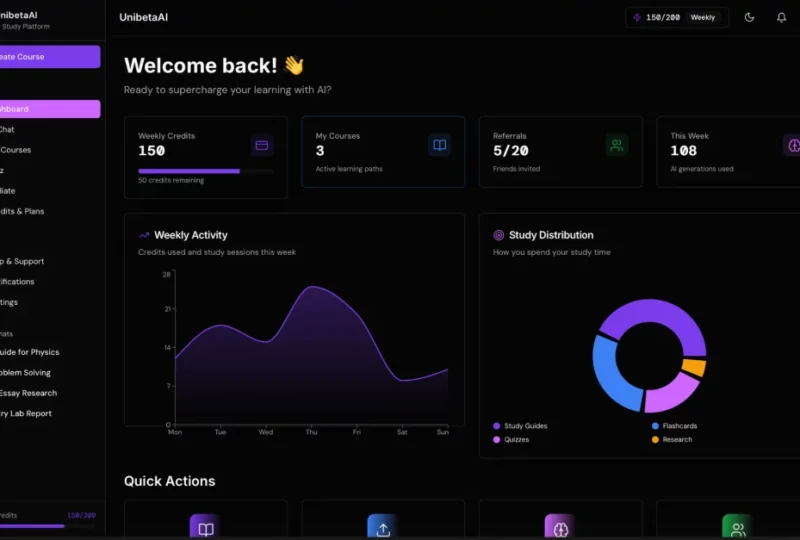
Recognising that global chatbots like ChatGPT struggle to make sense of photocopied course packs and idiosyncratic local syllabuses, they rebuilt UniBeta around algorithmic revision—training AI to spot high-yield topic clusters from past papers. For TechCabal, OPEYEMI KAREEM goes inside UniBeta’s bruising journey from a failed campus super-app to a targeted AI study tool.
By their second year, most university students have settled into a rhythm: gauging which lecturers demand the most vigilance, where to unearth past question papers, and how to survive exam seasons. Dare Oluwayanmife Adeola arrived through a less conventional door. He entered the second-year Urban and Regional Planning class at the University of Lagos (UNILAG) via JUPEB—an intensive foundation programme.
That rigorous preparatory year forced him to engineer a disciplined personal schedule to balance his coursework alongside an active commercial hustle. “Most students I observed were either sacrificing their grades to make ends meet, or burning out socially just to keep up academically,” Adeola told TechCabal. “University is supposed to be a total experience. You shouldn’t have to compromise your