
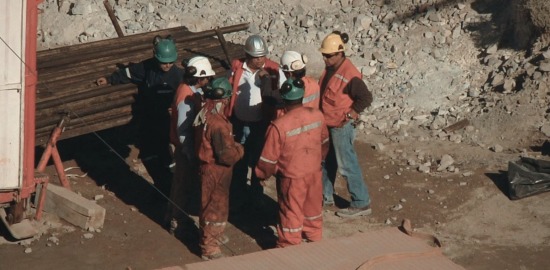


More than 15 years after 33 Chilean miners emerged alive from more than 2,000 feet underground, engineer Igor Proestakis can vividly remember the moment he watched the first man reach the surface.
Proestakis, who was just 24 when he helped develop what became known as “Plan B,” one of the drilling strategies used in the historic 2010 rescue, said he had spent 39 straight days working with little sleep as engineers raced to create an escape route through hundreds of meters of solid rock. When the first miner emerged, Proestakis broke down. “All my effort helped to take one guy out,” Proestakis told The Christian Post. “I broke my back.
I worked 39 days without stop. I barely slept every night, probably one hour, two hours, a couple minutes sometimes, and everything makes sense when just the first guy went out.” “I cried like a baby,” he said, recalling that he became so emotional he couldn't continue watching the rescue on television.
“I felt like my job was done.” The extraordinary effort to save the miners is revisited in National Geographic's new three-part docuseries, “Chilean Mine Rescue: Race Against Time,” premiering Friday at 8 p.m. EDT on National Geographic and streaming the following day on Disney+ and Hulu. The series features previously unseen footage and interviews with survivors, relatives and rescuers as it recounts the 69-day ordeal. On Aug.
5, 2010, a collapse at the San José copper and gold mine in northern Chile trapped 33 men deep beneath the Atacama Desert. For more than two weeks, their fate was unknown. Then, on Aug. 22, rescuers drilling exploratory holes broke through to the area where the men had taken refuge. Attached to the drill was a handwritten message that would become famous around the world: the miners were alive.