
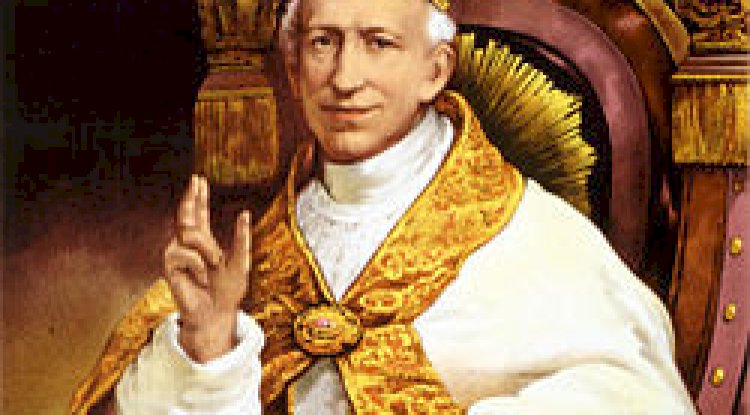


To correct this error, we would do well to read Pope Leo XIII’s encyclical Immortale Dei, “On the Christian Constitution of States” (promulgated November 5, 1885). However, we will need to be docile in approaching this teaching, as it is rather challenging to modern and American sensibilities.
(Note that an audiobook of Immortale Dei is available for free on Catholic Culture Audiobooks.) The argument of this encyclical proceeds from the starting point that the State, like the Church, receives its authority from God (Romans 13:1). Therefore, like everything that comes from God, the authority of the State must be subject to Him.
Men, not just as private individuals but as communities and public authorities, are obligated to obey God, and this obedience cannot be limited to what can be known by reason. Since all truth is one and comes from the same Source, we cannot arbitrarily exclude revelation as binding on states.
So, Leo says, the State has duties to profess, protect and foster religion, and not just any religion, but the true Faith: The State, constituted as it is, is clearly bound to act up to the manifold and weighty duties linking it to God, by the public profession of religion.
Nature and reason, which command every individual devoutly to worship God in holiness, because we belong to Him and must return to Him, since from Him we came, bind also the civil community by a like law… Since, then, no one is allowed to be remiss in the service due to God, and since the chief duty of all men is to cling to religion in both its reaching and practice—not such religion as they may have a preference for, but the religion which God enjoins, and which certain and most clear marks show to be the only