
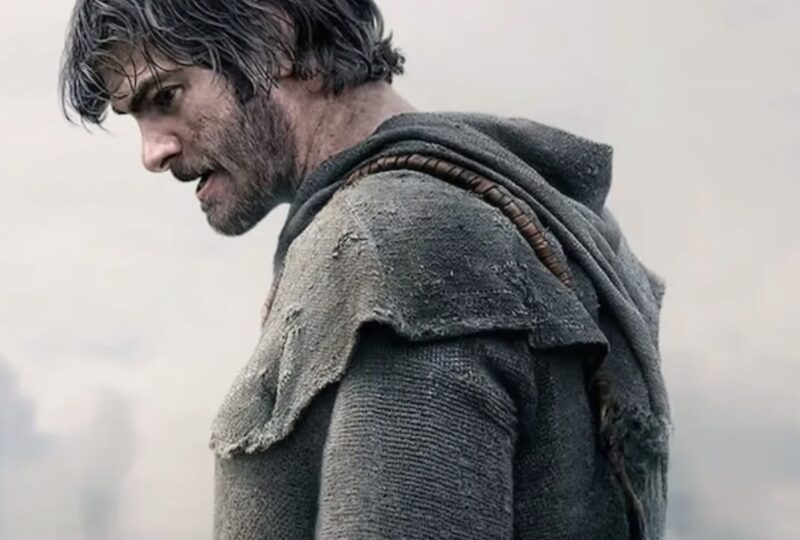


LOS ANGELES — Andrew Garfield is no stranger to inhabiting men wrestling with God, from a 17th-century Jesuit priest in “Silence” to Desmond Doss in “Hacksaw Ridge” and televangelist Jim Bakker in “The Eyes of Tammy Faye.” And in Paul Greengrass’ “The Uprising,” the 43-year-old British actor once again finds himself in spiritual territory as the Ploughman, an ordinary farmer swept into the Peasants’ Revolt of 1381.
This time, however, his character’s journey is one of disentangling God from a religious system that, Garfield told The Christian Post, has distorted Christianity in the service of wealth and power.
“What the Ploughman goes through is a kind of dismantling of a bastardized form of Christianity that he’s been living under, and it’s been oppressive for his people,” the Golden Globe Award-winning actor said in a sit-down interview alongside Greengrass and co-star Thomasin McKenzie.
At one point, after witnessing horrific bloodshed (the Focus Features film is rated “R” for violence), Ploughman asks, bleakly, “Where is God in all of this?” According to Garfield, that wrestling reflects his character’s inability to reconcile God's goodness with the misuse of religion. In the film’s world, set in England in 1381, challenging the king's divinely sanctioned authority, considered God’s mouthpiece, could have devastating consequences.
“You’re literally living under the threat of a hierarchical society where if you question that the king is the mouthpiece of God, that’s kind of treasonous,” Garfield said. “So I think there’s a kind of imprisonment that feels, you know, there’s something wrong, something’s amiss.” “The Uprising,” releasing in theaters Sept.
10, unfolds in the aftermath of the Black Death, which killed roughly half the country’s population and left behind widespread grief, poverty, anger and economic upheaval. When those surrounding the young King Richard II impose a brutal tax on the poor,