
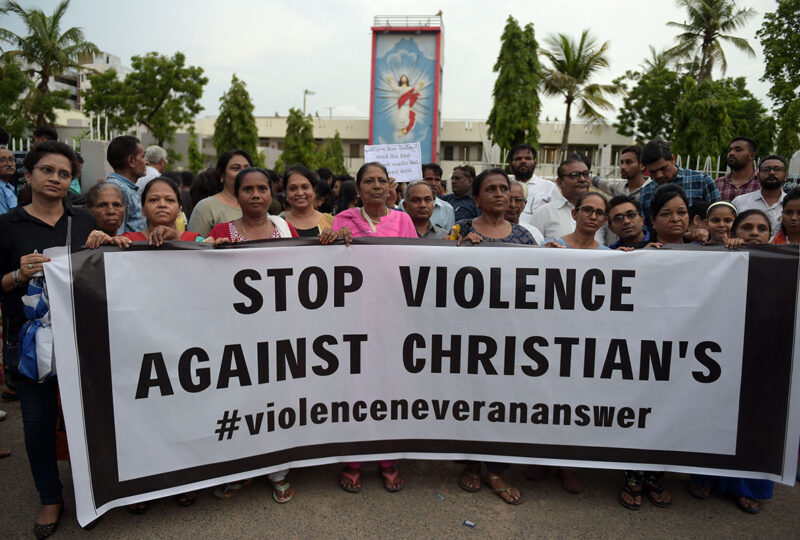


What happens when giving food to the hungry, educating a poor child, praying for the sick, or telling someone why you believe in Jesus Christ can be interpreted as evidence of a crime? Maharashtra, a state in western India that includes the city of Mumbai, is home to more than 1 million Christians. Its new Freedom of Religion Act came into force on August 28.
The law prohibits conversion through coercion, fraud, force, misrepresentation, inducement, threats or undue influence. Few Christians should object to the principle behind such prohibitions. Forced conversion is a contradiction in terms. Faith compelled by threats, fraud or material pressure is not Christian faith. The difficulty lies elsewhere: Who determines when Christian compassion becomes “inducement,” and when Christian witness becomes “undue influence”?
Under Maharashtra’s law, the person accused of facilitating a conversion bears the burden of establishing that it was voluntary. That provision should concern Christians, but it should also concern every Indian committed to religious liberty. The consequences are already visible. Reports from Maharashtra describe smaller Christian congregations asking people attending prayer meetings to sign declarations stating that they have come voluntarily.
Some churches have reportedly installed CCTV cameras and adopted other precautions following disruptions of Christian gatherings and accusations of unlawful conversion. Think about what this means. A person comes to a Christian prayer meeting because his family is suffering. A woman asks Christians to pray for her healing. Someone struggling with poverty receives assistance from a church. A student receives an education from a Christian institution.
Under a climate of suspicion, activities Christians regard as ordinary expressions of discipleship can acquire another interpretation: Was the prayer intended to convert? Was the food an inducement? Was education a means of influencing religious belief?