
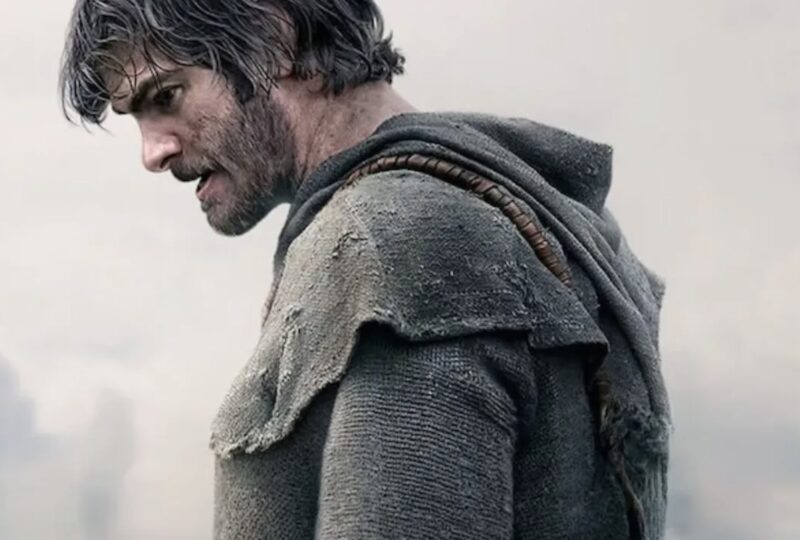


Paul Greengrass’ “The Uprising” is a blood-soaked investigation into a question Christians have wrestled with for centuries: What happens when flawed human beings become convinced that God is on their side?
Based on the Peasants’ Revolt of 1381, the historical epic stars Andrew Garfield as the Ploughman, a fictional farmer who becomes an unlikely leader of a rebellion against the young King Richard II, alongside Wat Tyler (Cosmo Jarvis), John Ball (Jamie Bell) and Alyce (Thomasin McKenzie).
The film is set in a bleak era: England is reeling from the Black Death, which killed thousands, and crushing taxation and vast inequality have left ordinary people at their breaking point. But “The Uprising” is not interested in presenting a black-and-white story of virtuous peasants overthrowing evil rulers like many medieval films.
Nearly everyone believes his or her cause is righteous, and nearly everyone finds a way to invoke God in defending it without examining their own behavior. It becomes apparent early in the film that the king’s authority is treated as divinely sanctioned.
A priest tells the young ruler, a moldable and tortured young man struggling to forge his own path, “God chose you to do His will.” Meanwhile, the rebels are increasingly convinced that justice, and God, is on their side, no matter how brutal their tactics become to achieve their goals.
The result is a disturbing portrait of what happens when people stop submitting their understanding of justice to a biblical understanding of God and instead, adopt the authority to dispense His judgment themselves. Garfield’s Ploughman is grieving, desperate and surrounded by people who have little recourse against a system stacked against them. His demand for justice is understandable; audiences will empathize with his sad-eyed fight for a better life.
But as the rebellion grows, so does anger, and