
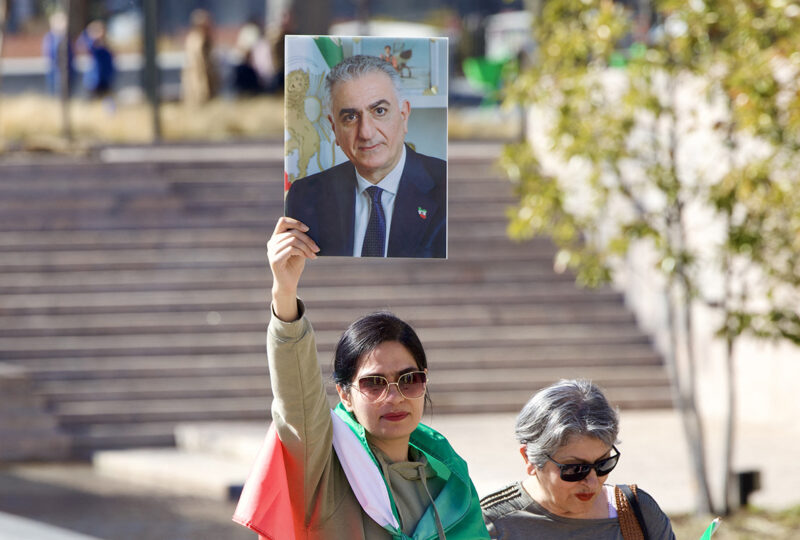


I recently had the privilege of meeting Crown Prince Reza Pahlavi with a small group of evangelical pastors and ministry leaders. As an Iranian-American, a former Muslim, and someone who has spent much of my professional life studying Iran, Islamism, and U.S. national security policy, I came to the meeting with a question that has hovered over every serious discussion about the Islamic Republic for decades — what happens the day after?
Our meeting with the Crown Prince delivered a clear resolution: he possesses a concrete roadmap for the day after. Far from treating these issues as mere theoretical concepts, he has established a comprehensive transition framework to renew Iran into the great civilization it once was — fostering economic prosperity, safeguarding religious liberty, and supporting the growth of the underground Church.
His five-part strategy focuses on supporting the Iranian people, encouraging regime defections, organizing Iranians across the diaspora, and executing a comprehensive blueprint for post-regime reconstruction. Most importantly, he does not describe himself as the ruler who will determine Iran’s final political system. He describes his role as leading and facilitating a transition in which the Iranian people ultimately determine their form of government.
A particularly crucial segment of our discussion with Crown Prince Pahlavi centered on his commitment to religious freedom. Under the Islamic Republic, Christians — particularly Muslim-background believers — have faced surveillance, persecution, and death for their faith. Yet Christianity has continued to spread. As a former Muslim who came to Christ, I cannot look at what is happening inside Iran merely through the lens of geopolitics. Something spiritual is occurring there.
For decades, the Islamic Republic has tried to impose Islam through the power of the state. Instead of producing faith, coercion has produced profound disillusionment. At the same time, men and women are encountering