
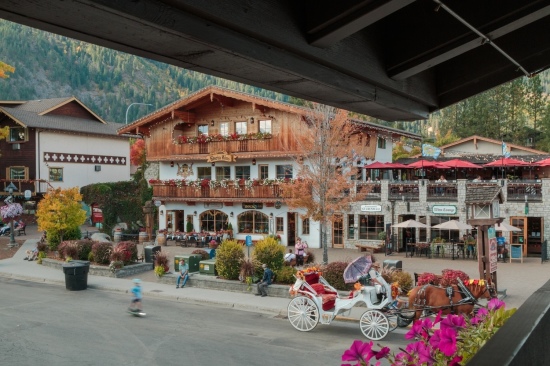


In Leavenworth, a Washington mountain town remade in the image of Bavaria, alphorns echo amid the Cascades and beer gardens line streets that look imported from the Alps. Since the 1960s, Leavenworth has gone all-in on Bavaria. Buildings were constructed or renovated with facades that would hardly look out of place in southern Germany or elsewhere in the Alps, including Tyrol in Austria and Italy’s South Tyrol.
Between the architecture, taverns with beer gardens and seemingly random alphorn performances, you occasionally have to remind yourself which continent you are on. Admittedly, some buildings along Front Street — pedestrianized like the main streets in European old towns — are a bit pastiche. Nobody will mistake them for medieval survivors of the Holy Roman Empire. Still, taken as a whole, Leavenworth feels surprisingly authentic. Much of that comes from the commitment.
After six decades, what began as a borrowed identity has become a tradition in its own right. The irony is that Leavenworth did not become Bavarian because a large German community brought the old country with it. The transformation was a matter of economic survival. Railroading and logging once sustained the town. When those industries declined, Leavenworth needed another reason for people to visit.
In the 1960s, local boosters embraced a Bavarian makeover to lure visitors across the mountains from Seattle and elsewhere in the Puget Sound region. I visited for the opening of Oktoberfest, which began Oct. 2 and continues for two more weekends through Oct. 17. Judging by the crowd, all 2,263 souls counted in Leavenworth’s 2020 census had turned out — and then some. The festivities unfold across beer gardens and three stages hosting 13 musical acts over the three weekends.
Opening weekend brought a Swiss band known for yodeling accompanied by accordions. The Freddy Pfister Band arrives