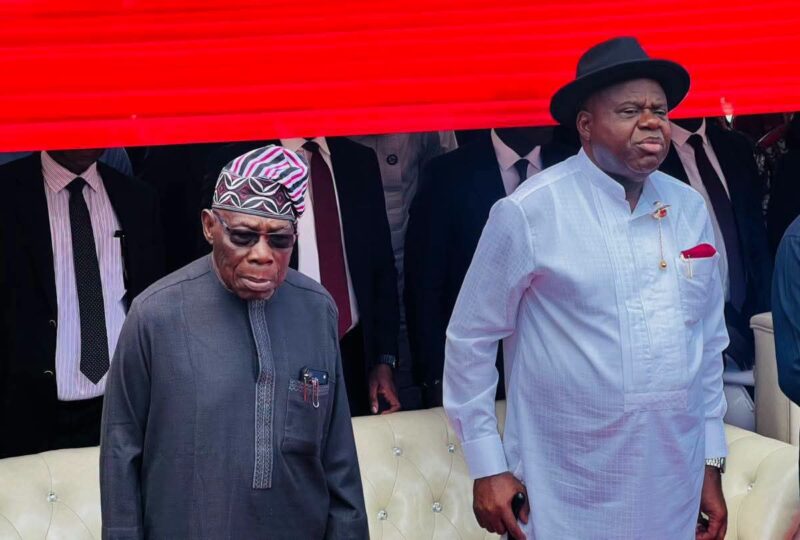


Olusegun Obasanjo with Governor Douye Diri at the flag-off of the crude distillation unit in Bayelsa Former President Olusegun Obasanjo and Bayelsa State Governor Douye Diri have renewed calls to review Nigeria’s 13 per cent derivation allocation to oil-producing states, arguing that the current arrangement has not delivered a fair share of the country’s petroleum wealth to the Niger Delta.
Mr Obasanjo, who described the 13 per cent allocation as a starting point rather than a final settlement, said oil-producing states and communities had not received a fair deal from the exploitation of resources in their territories. “You are right that the states and oil-producing communities have not got a fair deal so far. Thirteen per cent is the beginning. You can continue to talk,” the former president said.
According to The Punch newspaper, Mr Obasanjo spoke on Monday at the flag-off of the $1 billion Azikel Refinery crude distillation unit in Obunagha, Yenagoa Local Government Area of Bayelsa State. Mr Diri, who has repeatedly challenged the distribution of petroleum revenues, also criticised the Land Use Act, arguing that the law places oil-producing communities at a disadvantage by separating control of land from the ownership and management of the resources beneath it.
The renewed demands revive longstanding debates over resource control, fiscal federalism and the extent to which communities bearing the environmental and social costs of oil production benefit from the revenues generated from their territories. Calls for a higher derivation allocation follow ongoing questions about how state governments in the Niger Delta account for and use the substantial revenues they already receive from the Federation Account.
Under Section 162(2) of the 1999 Constitution, the federal government is required to ensure that the principle of derivation is reflected in the allocation of revenue from natural resources, with not less than