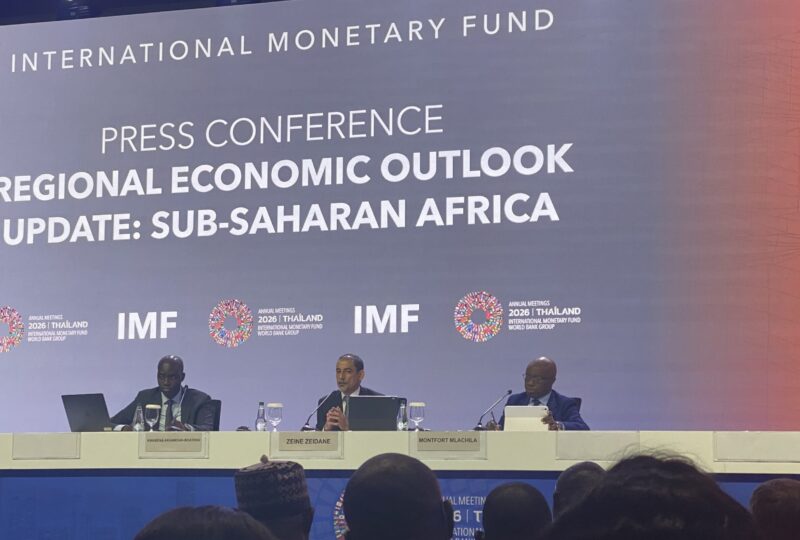


The International Monetary Fund (IMF) on Thursday urged the Nigerian government and other African economies to ensure that savings realised from subsidy removal policies are channelled towards social protection for poor and vulnerable people in their countries. Zeine Zeidane, Director of the African Department of the IMF, made this known at the presentation of the Regional Economic Outlook Update for Sub-Saharan Africa on the sidelines of the World Bank/IMF annual meetings in Bangkok, Thailand.
Speaking in response to questions on the tension generated by subsidy removal by the government in Nigeria and other African economies, Mr Zeidane said that it becomes imperative for the government to protect the poor in the face of high cost of living exacerbated by the removal od subsidy.
“On the question of subsidies, what I want to say is that as an institution, we recommend in general to governments to pay great attention to social protection and to protect the most vulnerable components of society. “It’s not specific to Nigeria, if you look at our programme, we have many programmes but we have always indicated target on social spending. We care a lot about the most vulnerable components of society.
Our advice on subsidies is that if you look at subsidies in general, and in particular energy subsidies, they benefit the most wealthy components of society,” he said. Nigeria has introduced a series of reforms the government said were focused on fixing the structure of the economy, although the impact has been enormous for many Nigerians grappling with cost-of-living crisis.
The government introduced reforms in the foreign exchange market, abolished what it termed a wasteful, corruption-ridden subsidy regime amid fiscal pressures, and institutionalised tax reforms.