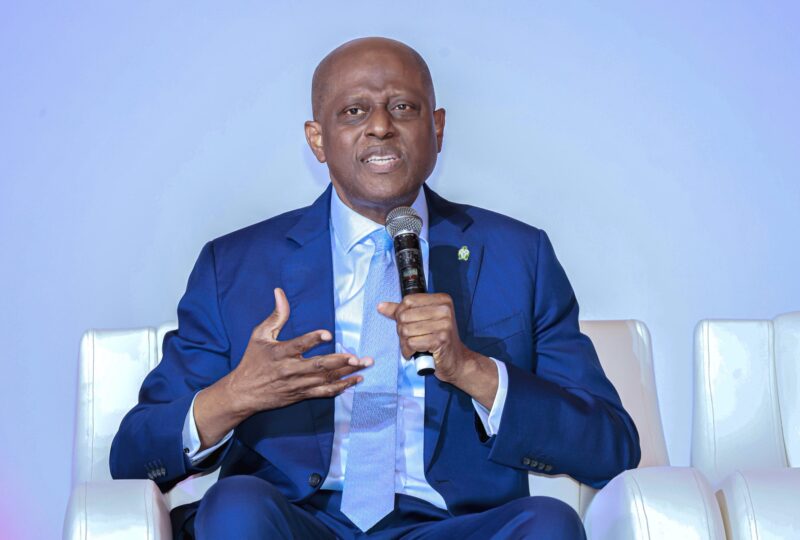


The Governor of the Central Bank of Nigeria (CBN), Olayemi Cardoso [PHOTO CREDIT: Central Bank of Nigeria] Olayemi Cardoso, the governor of the Central Bank of Nigeria, said on Thursday that Nigeria’s fiscal crisis forced the monetary and fiscal authorities to be creative in revenue generation and stabilisation efforts.
Mr Cardoso spoke on Thursday while featuring on a high-level panel themed “Debate on the Global Economy: Forging Resilient and Dynamic Economies for the Future”, held on the sidelines of the World Bank/IMF meetings in Bangkok, Thailand.
Moderated by Lisa Abramowicz, co-host of “Bloomberg Surveillance”, the debate was put together to explore how countries can build resilient and dynamic economies in an increasingly fragmented and uneven global landscape, using resilience as the common thread across the three segments. Speaking on the panel, Mr Cardoso said the fiscal reality of the Nigerian state when the new administration came into power forced policy makers to be creative in their solution ideas.
“When you are going through a crisis, it forces you to be creative,” Mr Cardoso said. Nigeria’s gross external reserves stand at $55.1 billion, with net foreign reserves at about $46 billion, according to recent updates from the Central Bank of Nigeria, amid relative stability in the foreign exchange market.
The CBN governor explained that the government inherited a situation where external reserves dropped to about $3 billion and the nation was owing about $7 billion in sundry obligations. The orthodox monetary policy helped to pay the debt and stabilise the economy, Mr Cardoso said, adding that it was clear to the CBN that reliance on oil revenue was not a sustainable model.
“We had to be creative as to how we diversify,” he said, adding that the apex bank looked at the diaspora and international remittances to remove all the bottlenecks