
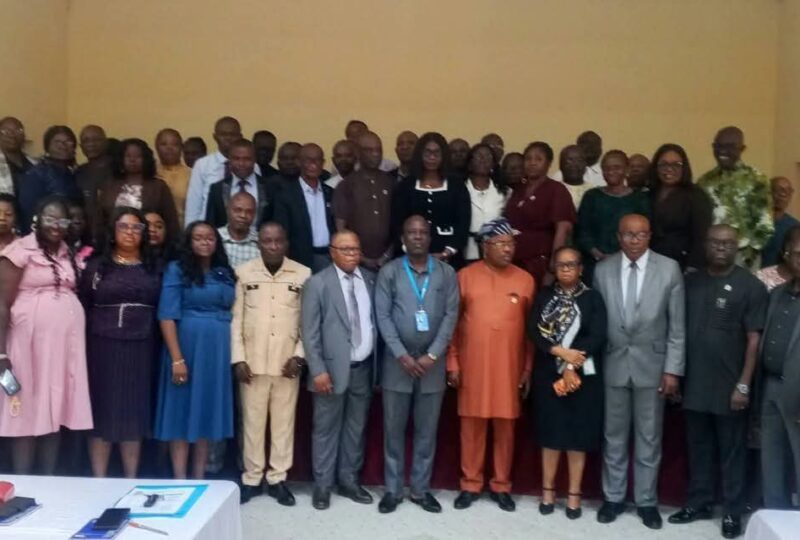


Members of Local Government Committees on Food and Nutrition in Akwa Ibom’s 31 local government areas in a group photo Nearly one in four children under five in Akwa Ibom State is stunted, highlighting the scale of chronic malnutrition confronting the state as the government moves to coordinate nutrition interventions across its 31 local government areas.
The 2023–2024 Nigeria Demographic and Health Survey (NDHS) puts the prevalence of stunting in Akwa Ibom at 24.1 per cent, confirming figures cited by the United Nations Children’s Fund (UNICEF). Nationally, 40 per cent of children under five are stunted, according to the survey. Stunting occurs when children are too short for their age because of chronic undernutrition. It can impair physical growth and brain development, undermine learning and affect productivity in adulthood.
The figures were highlighted on Tuesday during the inauguration of Local Government Committees on Food and Nutrition across Akwa Ibom’s 31 local government areas. The Akwa Ibom State Ministry of Budget and Economic Planning organised the event in Uyo in collaboration with UNICEF. UNICEF’s nutrition specialist, Oluniyi Oyedokun, said the state’s stunting burden required coordinated action to address the factors responsible for childhood malnutrition.
He explained that stunting is linked to inadequate nutrition, particularly during the first 1,000 days of a child’s life, from conception to the second birthday. The period is critical for physical growth and brain development. Prolonged nutritional deprivation during this stage can have lasting consequences for children’s health and development. Mr Oyedokun warned that stunted children face an increased risk of impaired cognitive development, poor school performance, frequent illnesses and reduced productivity in adulthood.
He said establishing nutrition committees in all 31 local government areas was intended to bring interventions closer to communities and strengthen implementation of the National Policy on Food and Nutrition.