

The confirmation of an Ebola case in Abuja, Nigeria’s capital, has put the country’s health system on heightened alert, 12 years after it successfully contained an outbreak that claimed eight lives. The latest case involves a woman who recently arrived in Nigeria from Uganda and is currently receiving treatment in isolation. Health authorities have identified 44 contacts and commenced intensive tracing and monitoring efforts to prevent further transmission.
Although officials have moved swiftly to contain the case, the development has revived concerns about Ebola, one of the world’s deadliest infectious diseases. The outbreak has been linked in reports to the Bundibugyo virus, a type of Ebola virus for which no licensed vaccine is currently available. However, PREMIUM TIMES could not independently confirm which specific Ebola virus caused the imported case in Abuja.
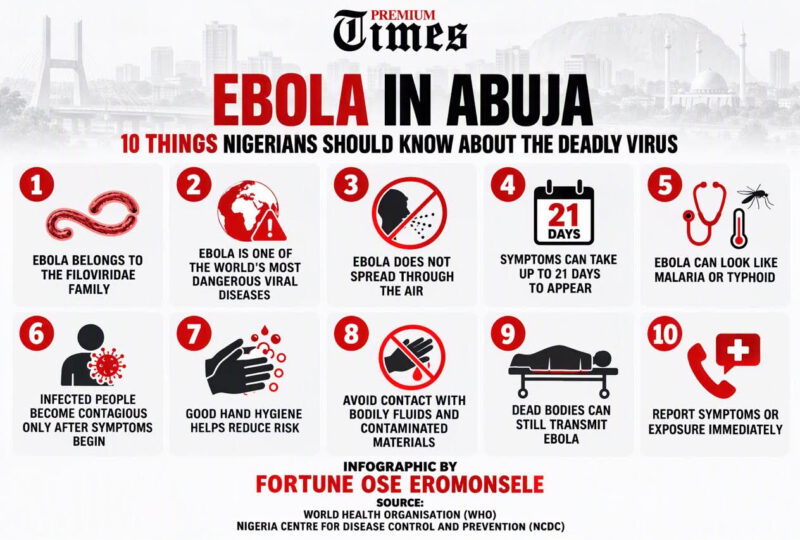
Ebola is a severe infectious disease that can be fatal without prompt medical attention. Understanding how the virus spreads, recognising its symptoms and knowing how to protect oneself are essential. Ebola disease is caused by viruses belonging to the Orthoebolavirus genus within the Filoviridae family, commonly known as filoviruses. Scientists have identified several species that can cause illness in humans, including Ebola virus, Sudan virus, and Bundibugyo virus.
This distinction matters because vaccines and treatments may not be equally effective against every species. The disease can cause severe illness affecting multiple organs and has recorded fatality rates ranging from 25 to 90 per cent in previous outbreaks. However, survival chances improve significantly when patients receive early diagnosis, rehydration and supportive medical care. Unlike COVID-19, influenza or other respiratory infections, Ebola is not airborne.
People become infected through direct contact with the blood, vomit, saliva, urine, faeces, or other bodily fluids of someone who is ill with the disease. The virus can also spread through contact with contaminated clothing,